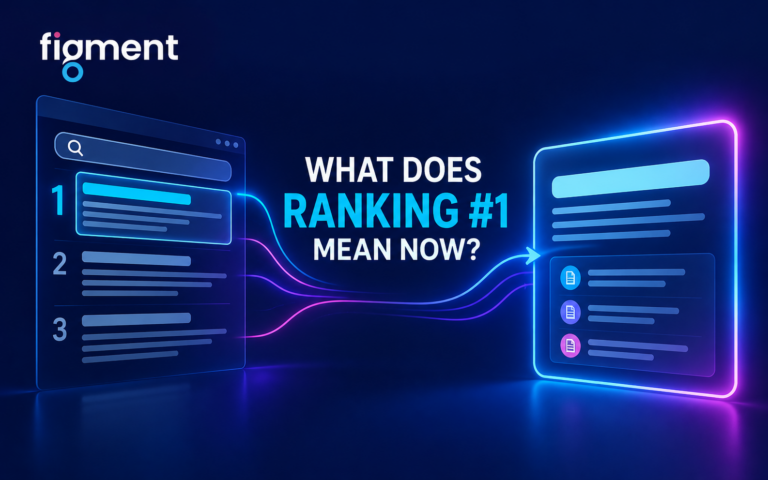
When ChatGPT recommends a financial adviser or Gemini cites a healthcare practice, there’s sophisticated technology working behind the scenes to make those selections. But how exactly do large language models (LLMs) work for SEO? What makes one piece of content citation-worthy whilst another gets ignored?
The answer lies in understanding LLM content analysis and how these platforms differ from traditional search engines. It’s not about keyword density or backlink counts. It’s about something deeper: whether AI can genuinely understand your expertise and trust it enough to recommend you.
Here’s what’s actually happening when AI platforms evaluate your content.
The fundamental difference in how LLMs process information
Traditional search engines crawl websites, index pages, and rank them based on hundreds of factors including backlinks, keywords, and technical signals. It’s a relatively mechanical process.
LLM content understanding works completely differently.
Large language models don’t just scan for keywords. They analyse the wider meaning of your content, understanding context, relationships between concepts, and whether information genuinely answers questions comprehensively.
Think about a patient asking “Should I see a physiotherapist or an osteopath for lower back pain?” A traditional search engine might return pages that contain those keywords. An LLM analyses content to understand which source actually explains the distinction clearly, demonstrates medical expertise, and provides genuinely helpful guidance.
This capability means the LLM is evaluating content quality at a different level than traditional algorithms.
The technology behind this is called natural language processing SEO, though that term doesn’t quite capture the sophistication involved. These models have been trained on vast amounts of text, learning patterns in how humans communicate expertise, explain complex topics, and demonstrate credibility.
Breaking down the AI search content evaluation process
Understanding how ChatGPT ranks content requires looking at the specific factors these platforms prioritise.
Comprehensiveness matters enormously
LLMs favour content that thoroughly addresses topics rather than surface-level summaries. When someone asks about buy-to-let mortgage options, AI platforms analyse whether content covers interest rates, deposit requirements, tax implications, and eligibility criteria, or just skims the basics.
A property investment guide that comprehensively explains stamp duty, capital gains tax, rental income reporting and financing structures will outperform a brief overview that touches on these topics without real depth.
This is one of the key LLM ranking factors that differs from traditional SEO, where shorter, more focused content often performs well.
Clarity and structure influence selection
How do LLMs choose sources? Partly based on how easily they can extract and understand information.
Content structured with clear headings, logical flow, and straightforward language makes it simpler for AI to parse and cite accurately. When a financial planner writes “Here’s how pension annual allowances work” followed by a clear explanation, this makes it easier for LLMs to process than convoluted paragraphs burying the key information.
According to research from Stanford University, large language models excel at understanding well-structured information, but can struggle with ambiguity or unclear reasoning. This directly impacts which sources they select.
Demonstrated expertise creates trust signals
The AI content selection process heavily weights credibility indicators. LLMs look for:
- Named authors with visible qualifications
- Specific experience and credentials
- Clear institutional affiliation
- Detailed case examples showing practical knowledge
- Technical accuracy in explanations
A healthcare practice explaining treatment options gains credibility when content includes “Written by Dr Sarah Johnson, MBBS, with 15 years of experience in musculoskeletal medicine” rather than generic authorship.
These expertise signals help AI search algorithms determine which sources are trustworthy enough to recommend.
How natural language processing shapes content selection
The science behind how LLMs generate search results centres on natural language processing capabilities that analyse content at multiple levels.
Semantic understanding beyond keywords
When you write about “pension planning for the self-employed,” LLMs don’t just match those exact words. They understand related concepts like SIPPs, personal pensions, tax relief, and retirement planning.
This approach means content optimised purely for exact-match keywords won’t perform as well as comprehensive guides covering the full topic landscape.
A mortgage broker explaining “re-mortgaging” who also naturally discusses product transfers, and rate switching demonstrates broader understanding that AI platforms recognise as more valuable than content that is laser-focused on one specific term.
Context awareness in evaluation
LLMs analyse how information connects contextually. When a property surveyor writes about structural surveys, AI platforms evaluate whether the content appropriately connects building age, construction types, common defects and regulatory requirements.
Content that demonstrates these logical connections and contextual understanding scores higher in the AI search content evaluation process than isolated facts without clear relationships.
Tone and confidence assessment
Here’s something most people miss: LLMs can detect uncertainty in writing. Content hedged with excessive qualifiers like “might,” “possibly,” or “potentially” signals less confidence than clear, authoritative statements.
Compare “ISAs might offer some tax benefits for certain investors” with “ISAs provide tax-free growth and income for UK residents within annual allowance limits.” The second demonstrates expertise with confident, specific information.
This doesn’t mean making unsubstantiated claims. It means stating what you know clearly rather than undermining your expertise with unnecessary hedging.
The citation criteria that determine source selection
Understanding ChatGPT source selection and how other platforms choose which businesses to recommend reveals specific LLM citation criteria.
Recency and relevance matter differently
For time-sensitive topics, LLMs prioritise recently updated content. A guide to capital gains tax rates from 2019 won’t compete with current information reflecting 2026 regulations.
But for evergreen topics, recency matters less than comprehensiveness. A detailed explanation of how mortgages work from three years ago might still get cited if it’s more thorough than newer but superficial content.
Answer completeness affects selection
When someone asks a specific question, LLMs evaluate whether content actually answers it fully. Partial answers or tangential information get deprioritised.
A patient searching for “recovery time after knee arthroscopy” wants specific timeframes, activity restrictions and what to expect during healing. Content that dances around the question without clear answers won’t get cited, even if it’s well-written.
Consistency and accuracy verification
How do LLMs work for SEO differently than traditional search? They cross-reference information across multiple sources looking for consistency.
If your content about pension contribution limits contradicts government guidance or established financial regulations, LLMs may deprioritise it. Accuracy matters because these platforms aim to provide reliable information.
What makes content LLM-friendly in practice
Knowing the theory is one thing. Applying it requires understanding what AI search relevance factors look like in actual content.
Write for humans first, AI second
The best content serves both audiences naturally. When a financial adviser explains Inheritance Tax planning clearly enough that a client understands it, that clarity also helps LLMs analyse and cite the information.
You’re not writing in a special “AI voice.” You’re explaining your expertise comprehensively and clearly, which happens to be exactly what both human readers and AI platforms value.
Structure content to answer specific questions
Rather than broad topic pages, create content addressing specific queries your prospects ask. “What are the tax implications of selling a second property?” works better than “property tax information”, for example.
This question-focused structure aligns with how LLMs choose sources, making it easier for platforms to match your content with relevant queries.
Include specific, verifiable information
Vague statements don’t help LLMs or readers. “Property prices vary by location” adds little value. “The average property price in Islington increased 4.2% in 2025 to £687,000” provides specific, useful information that AI platforms can cite confidently.
Financial advisers explaining pension regulations, healthcare providers discussing treatment protocols, and property professionals covering legal requirements should all favour specific, accurate details over generalisations.
Demonstrate rather than claim expertise
Saying “we’re experts in conveyancing” matters less than demonstrating expertise through detailed explanations of the process, common complications, and practical solutions.
When a solicitor writes “Here’s what happens when a property chain breaks and how we help clients navigate this situation,” followed by specific scenarios and approaches, that demonstrates expertise in ways LLMs recognise.
Practical implications for professional services
Understanding how LLMs analyse content changes how you should approach digital visibility strategy.
For healthcare practices, this means creating patient resources that thoroughly explain conditions, treatments, and expected outcomes rather than brief service descriptions.
For financial advisers, it means comprehensive guides covering specific planning scenarios with enough detail that AI platforms recognise genuine expertise rather than marketing fluff.
For property professionals, it means detailed explanations of processes, regulations, and practical considerations that demonstrate deep industry knowledge.
The businesses gaining AI search visibility aren’t necessarily those with the biggest marketing budgets. They’re the ones whose content genuinely reflects expertise in ways large language models can understand and verify.
This represents a fundamental shift. Traditional SEO often rewarded optimisation tactics. AI search rewards genuine expertise communicated clearly. That’s actually good news for professional services firms that know their stuff but haven’t mastered SEO.
Applying this knowledge strategically
Knowing how LLMs work is valuable. Applying that knowledge systematically is what delivers results.
Start by auditing existing content through an AI lens. Does it demonstrate clear expertise? Is information comprehensive? Are credentials visible? Does the structure make the content easy to understand and cite?
For many professional services businesses, the content foundation already exists. It just needs restructuring to align with how LLMs evaluate and select sources.
This is where specialist expertise in LLM optimisation makes the difference between content that exists and content that gets cited. Understanding the science is one thing. Implementing it across your entire digital presence whilst maintaining quality and demonstrating genuine expertise requires focused effort.
The opportunity is clear: as more prospects turn to AI platforms for recommendations, the businesses that understand how these platforms analyse content gain disproportionate visibility.
When someone asks ChatGPT for a pension adviser in London or Gemini for a property solicitor, being cited as a trusted source opens doors that traditional advertising can’t reach.
Achieving that visibility requires more than surface-level optimisation, however. It requires content that genuinely reflects your expertise, structured in ways AI platforms can understand and confidently recommend.
If you’re ready to position your business where AI platforms cite you as the expert you are, understanding how LLMs analyse content is your starting point.
Get in touch with Team Figment to explore how this science translates into practical visibility for your business. Because being an expert matters. But being recognised as one by the platforms millions now trust matters more.