Chasing hundreds of low-quality backlinks might have worked a decade ago, but today it’s more likely to harm your rankings than help them. Building genuine authority means focusing on backlink quality over sheer numbers. Here’s how to develop a link profile that actually strengthens your visibility and reputation.
Why the old link building playbook is dead
Remember when SEO agencies would proudly report “we’ve built 500 backlinks this month” as if volume alone was the measure of success?
Those days are gone.
Google’s algorithms have become remarkably sophisticated at distinguishing between genuine editorial links from respected sources and manufactured links from dubious directories, blog networks, and paid link schemes.
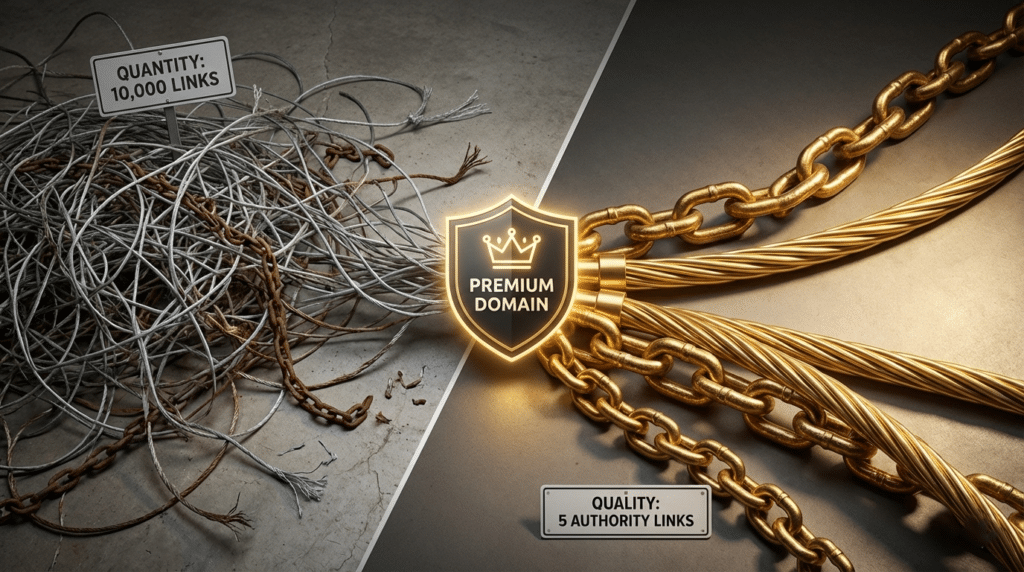
A single link from a respected industry publication, a leading university or a trusted government website carries more weight than 100 links from random blogs, low-quality directories, or link farms.
For a financial services firm, one mention in the Financial Times or a citation from a respected financial regulator’s resource page does more for your domain authority than dozens of links from generic business directories ever could.
The shift isn’t just about avoiding penalties (though that matters). It’s about recognising that backlink quality directly impacts how search engines and potential clients perceive your authority and trustworthiness.
What actually makes a backlink high quality
Not all backlinks are created equal. Understanding what separates valuable links from worthless ones is fundamental to effective link building.
Here’s what defines a genuinely valuable backlink:
Relevance to your industry
A link from a trusted healthcare publication matters enormously for a private medical clinic. A link from a fashion blog? Not so much.
Google evaluates links in context. A link from a source that’s topically related to your expertise carries significantly more weight than one from an unrelated website, regardless of that site’s overall authority.
Editorial placement, not paid or forced
The most valuable links are those you earn rather than manufacture. Editorial links appear because someone genuinely found your content valuable enough to reference.
These include:
- Citations in industry research or reports
- References in news articles
- Mentions in expert round-ups
- Links from educational resources
- Genuine resource page recommendations
Compare this to links you’ve paid for, links from blog comments, or links from websites that exist purely to sell backlinks. The difference in value is significant.
Authority and trust signals
Domain authority isn’t just about PageRank anymore. It’s about the overall trust signals a website carries. Does it have a strong reputation? Regular, quality content? Genuine engagement? Proper security protocols?
A property developer getting linked from a major architecture magazine or the Royal Institute of British Architects carries genuine authority. A link from “property-investment-tips-blog-2024.info” does not.
Natural anchor text
High-quality links typically use natural anchor text. Brand names, URLs or contextual phrases rather than keyword-stuffed anchors like “best mortgage adviser London cheap rates low fees”.
When links to your financial services firm use phrases like “according to Smith Financial” or “as this guide explains”, that’s natural. When every link contains exact-match keywords, that’s suspicious.
The real danger of toxic backlinks
Low-quality backlinks aren’t just ineffective. They can actively harm your website’s performance and reputation.
Toxic backlinks come from:
- Known link schemes or networks
- Websites with spam content or malware
- Sites penalised by Google
- Automated blog comments or forum spam
- Private blog networks (PBNs)
- Websites with adult, gambling or pharmaceutical spam content
These links send negative trust signals to search engines. If your backlink profile is littered with them, Google may conclude your website isn’t trustworthy, regardless of how good your actual content is.
For expert-led businesses in healthcare, finance, or property, this is particularly damaging. These sectors already face strict E-E-A-T (Experience, Expertise, Authoritativeness, Trustworthiness) scrutiny. A toxic link profile undermines all your efforts to demonstrate credibility.
Worse, some competitors engage in “negative SEO” by deliberately building spammy links to rival websites. It’s rare, but it happens. Regular link analysis helps you spot and eliminate these problems before they cause ranking damage.
How to audit your current backlink profile
Before you can improve your link profile, you need to understand what you’re working with.
Here’s how to conduct a practical backlink audit:
Use proper analysis tools
Google Search Console shows you a sample of your backlinks. But for comprehensive analysis you need dedicated tools. Ahrefs, Semrush, or Moz provide detailed backlink data including referring domains, anchor text distribution, and quality metrics.
For a private healthcare provider analysing their backlink profile, you’d want to see not just how many links you have, but where they’re coming from and whether those sources align with medical authority and trustworthiness.
Identify your strongest links
Look for links from:
- Industry publications and news sites
- Government or educational resources
- Professional associations
- Respected directories (not generic link directories)
- Client testimonials on reputable platforms
These are your assets. They demonstrate genuine authority and should be the benchmark for future link building efforts.
Spot potential problems
Red flags in your backlink profile include:
- Sudden spikes in backlinks from low-quality sources
- High percentage of exact-match keyword anchors
- Links from foreign-language sites unrelated to your business
- Links from sites with suspicious content
- Clusters of links from obviously interconnected websites
A financial planning firm shouldn’t have dozens of links from random overseas blogs about unrelated topics. If you do, investigate why.
Consider the anchor text distribution
Natural link profiles have varied anchor text (the text that carries the link). These will be mostly brand names and URLs, although there might be some generic phrases like “click here” or “this article”, and occasionally keyword-rich anchors.
If 80% of your anchors are exact-match keywords, that’s unnatural and potentially harmful.
Building authority links the right way
Quality backlinks aren’t bought or manufactured. They’re earned through genuinely valuable content and relationships. Here’s how to achieve just that:
Create genuinely linkable content
The foundation of quality link building is creating content other people want to reference. This might include, for example, original research, comprehensive guides, unique data, expert analysis, or helpful tools.
A real estate agent publishing detailed analysis of local market trends, complete with original data, creates naturally linkable content. Planning consultants, local news outlets and property investors have legitimate reasons to link to it.
Develop relationships with relevant publications
Rather than mass-emailing hundreds of websites begging for links, focus on building genuine relationships with a handful of relevant publications in your industry.
For financial services, this might mean contributing expert commentary to business publications, offering quotes for financial news stories, or collaborating on industry research. These activities naturally generate high-quality backlinks as byproducts.
Make use of existing relationships and clients
Your satisfied clients, industry partners and professional associations are often willing to link to your content or mention your expertise on their websites.
A private healthcare provider might be listed on hospital consultant directories, professional medical associations, or patient advocacy group resources. These are all high-quality, relevant backlinks that demonstrate genuine authority.
Just as strategic internal linking strengthens your website’s structure, strategic external link building from quality sources enhances your overall authority in Google’s eyes.
Focus on digital PR and earned media
Modern link building overlaps heavily with digital PR. Getting mentioned in news articles, industry reports, podcasts, or expert round-ups naturally generates quality backlinks.
These links carry weight because they’re editorial. Someone chose to reference your expertise because it added value to their content, not because you paid for placement or traded links.
According to research from Backlinko analysing 11.8 million Google search results, the number of referring domains correlates strongly with rankings. But it’s referring domain quality and diversity that matter, not total link count.
Quality metrics that actually matter
When evaluating potential backlink opportunities, look beyond surface metrics like Domain Authority (DA) scores.
Relevance and topical alignment
Would this website’s audience genuinely care about your content? If a property investment guide gets linked from a site about commercial real estate analysis, that’s topically relevant. If it gets linked from a random lifestyle blog, it’s not.
Real traffic and engagement
Does the linking site have actual readers? Check their content for genuine comments, social shares and signs of real engagement. A site with high DA but zero engagement is likely a link farm.
Editorial standards
Does the site maintain quality content standards? Does it have a regular publication schedule? Professional writing? Fact-checking? Sites with strong editorial standards are selective about what they link to, which makes their links more valuable.
Long-term stability
A link that remains live for years carries more value than links that disappear after a few months. Focus on building relationships and earning placements on stable, established websites rather than temporary or low-quality sources.
Ready to build authority that lasts?
Backlink quality matters more now than ever. As search engines become increasingly sophisticated, the gap between sites with genuine authority and those with manufactured link profiles widens constantly.
For businesses built on expertise in finance, healthcare or property, your link profile should reflect the same authority and trustworthiness you demonstrate in your actual work. Shortcuts and quantity-focused tactics undermine that positioning.
Focus on earning links from sources your ideal clients would respect. Create content valuable enough that respected industry voices want to reference it. Build relationships that naturally lead to quality placements over time.
At Figment Agency, we help expert-led businesses build genuine online authority through strategic content and earned visibility.
If you’re ready to develop a link profile that actually strengthens your reputation rather than harming it, let’s discuss how we can help.