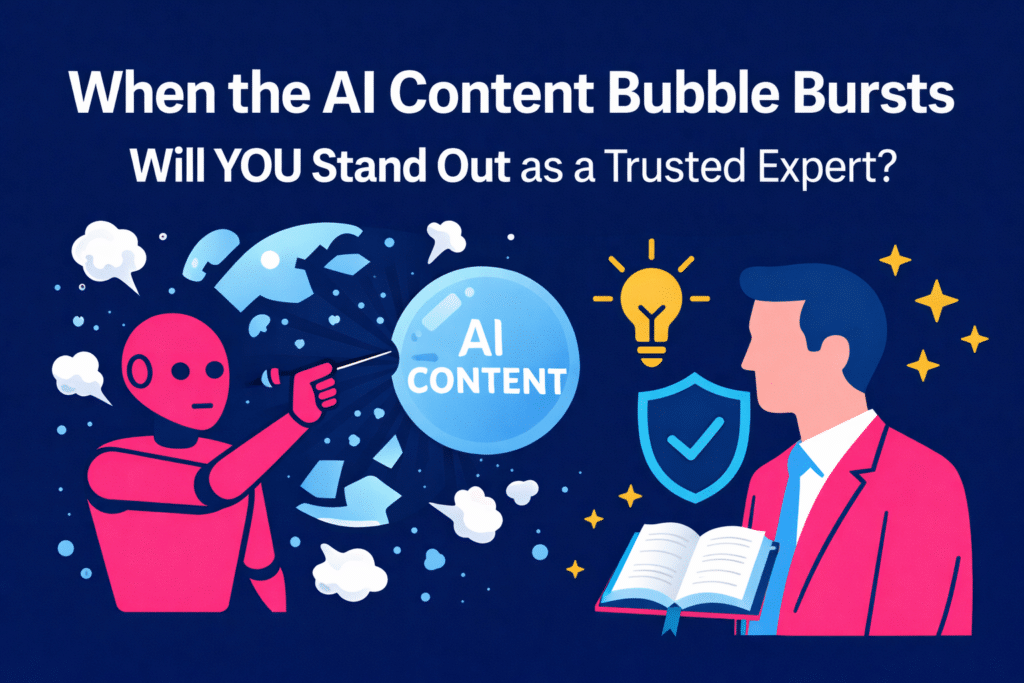
There’s been a lot of talk lately about the AI bubble — whether the hype can last, and when the investment might start to dry up.
But while most of the headlines focus on funding and tech development, there’s another AI bubble that’s already showing signs of strain. And it’s the one we see every day in digital marketing: content.
AI-generated blogs, articles, web pages and social posts are everywhere. It’s quicker, cheaper, and easier than ever to publish. But as more and more of the internet starts to look and sound the same, people are starting to notice.
And that’s the real risk: not that AI will take over content, but that it’ll flood the system with noise, making it harder for trusted, credible sources to stand out.
In this blog, I’m exploring what might happen when the AI content bubble eventually bursts (or even just deflates), why trust is quickly becoming the most important signal of all, and what brands need to do now to protect their visibility in the age of mass automation.
The ticking AI content time bomb – the warning signs are already here
In March 2024, Google rolled out a major core update aimed at tackling low-quality content. This was a massive turning point, with sites publishing low-value, unoriginal content — including a lot of AI-generated material — taking a hit.
The message was clear: content that exists purely to fill space or chase keywords isn’t going to cut it anymore.
Meanwhile, Google’s own AI Overviews have raised eyebrows. Some results are now quoting Reddit or Quora posts instead of credible expert sources.
That might be fine if you’re asking how to descale your kettle — but not if you’re researching financial advice or health information.
When large language models pull from crowdsourced opinions without fact-checking, it opens the door to misinformation. And that’s downright dangerous.
And users are catching on. There’s a growing sense that a lot of online content now feels… off. Bland. Repetitive. Slightly robotic. It’s the curse of AI-written blogs with no human insight or opinion behind them. You get volume, but very little value.
We’re seeing early signs of AI content saturation — and a steady erosion of AI content trust.
That’s why it’s so important to focus on what still works: real insight, original thought, and demonstrable expertise. If your content doesn’t reflect that, it’ll start slipping through the cracks.
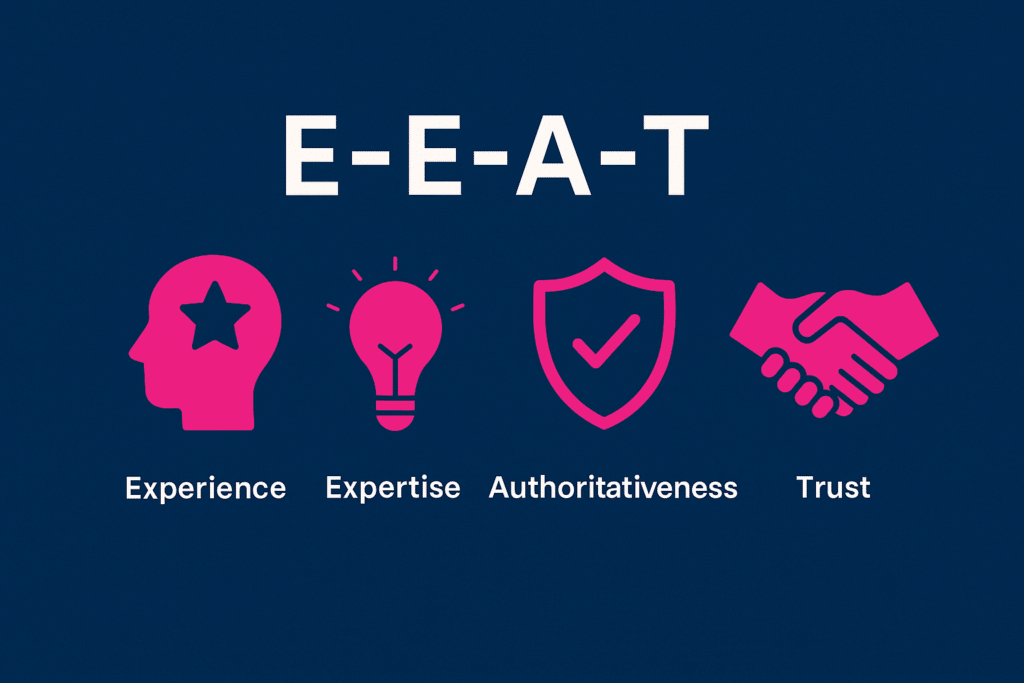
If you’re not sure what that looks like in practice, our deep-dive on human vs AI content performance explores exactly what’s cutting through, and why EEAT (Experience, Expertise, Authoritativeness and Trust) principles still matter, maybe more than ever.
One very important thing to bear in mind is that trust is fragile. Once it’s lost, it’s incredibly hard to win back.

What happens when the AI content bubble pops?
Here’s the real risk: it’s not going to be that brands stop creating content, but that it all starts to blur into one.
Because when everyone is publishing, and many are relying on the same AI tools to do it, the end result is predictably bland. Same phrasing. Same angles. Same ‘Top 10’ structures. There’s a sameness to it all — even if the intent is good.
The problem? When everything looks and sounds alike, credibility starts to erode. Not just for the bad content, but for the good stuff too.
Genuinely helpful, experience-led pieces start to drown in a sea of fluff. That’s how trust gets lost.
And in this new landscape, credibility is currency. Your expertise is only useful if it’s recognisable as such. If your content doesn’t sound like it came from a real person who knows what they’re talking about, people — and search engines — will start to ignore it.
This isn’t just about AI versus human content. It’s about AI vs human content that still adds value.

Why real expertise will take gold every time in the Content Olympics
If the flood of samey AI content is the problem, EEAT is the filter.
Search engines — and users — are becoming much sharper at spotting real expertise versus regurgitated fluff. That means trust signals matter more than ever.
And we’re not talking vague hand-waving about “quality content”. We mean clear, verifiable evidence that there’s a real person behind the words, and that they know their stuff.
Here’s what that looks like in practice:
- Named authors with real credentials, not just a first name and a stock image
- Clear, first-hand experience and specific examples — not just summaries of what others are saying
- Links to authoritative primary sources, rather than regurgitated material
- A distinct point of view — not just a bland listicle or AI-assisted rewrite
That’s the level that earns trust. That’s the level that lasts.
And it’s exactly what Google is now looking for, both through its algorithm updates and its wider guidance on EEAT and helpful content.
At Figment, our LLM optimisation approach builds this in by default. We help brands show up in AI-generated results by proving they’re worth quoting. So they’re not just present, but credible.
What brands need to do NOW – ahead of the AI content bubble bursting
If the future of AI content marketing is about trust, then your job as an expert-led business is clear: stop chasing quantity, and start proving credibility.
This doesn’t mean swearing off AI altogether — far from it. Tools like ChatGPT and Gemini can absolutely help speed up early drafts, restructure content, or break writer’s block.
But if you hit publish without adding real human value, all you’re doing is just adding to the noise.
So what should expert-led brands be doing instead?
📝 Publish less, but publish better.
A tight, insightful, thought-leading blog once a month beats four rushed surface content pieces that say nothing new. Even if you cut your output by half — but replace it with clearer structure, stronger insights and deeper research – you’ll notice a difference.
✍️ Bring in human judgement.
Yes, by all means let AI help with outlines or first drafts. But a machine can’t tell when something sounds too generic, or when you’ve missed the mark emotionally. That’s what you’re for. Add nuance. Add tone. Add relevance. Add personal experience and insight. That’s where the trust is built.
💡 Prioritise opinion, depth and distinctiveness.
We’re in the “prove it” phase of content. Instead of explaining what EEAT is, explain how you’re applying it in your own business. Share results. Share lessons. Share strong opinions. Brands with a point of view will always cut through the fog.
🎥 Use mixed formats.
Not everyone wants to read a 2,000-word blog. Could that same insight be turned into a short video or webinar? A visual guide? A carousel post for LinkedIn? One piece of strong content can power five more if you think smart. Search engines love it. Audiences love it more.
🚫 Know when NOT to use AI.
We’ve seen this go wrong: AI-written service pages that all sound the same, or brand tone of voice guides created by a tool that’s never heard the brand speak. If it’s designed to compel action or show personality, then it needs a human at the wheel. Simple as that.
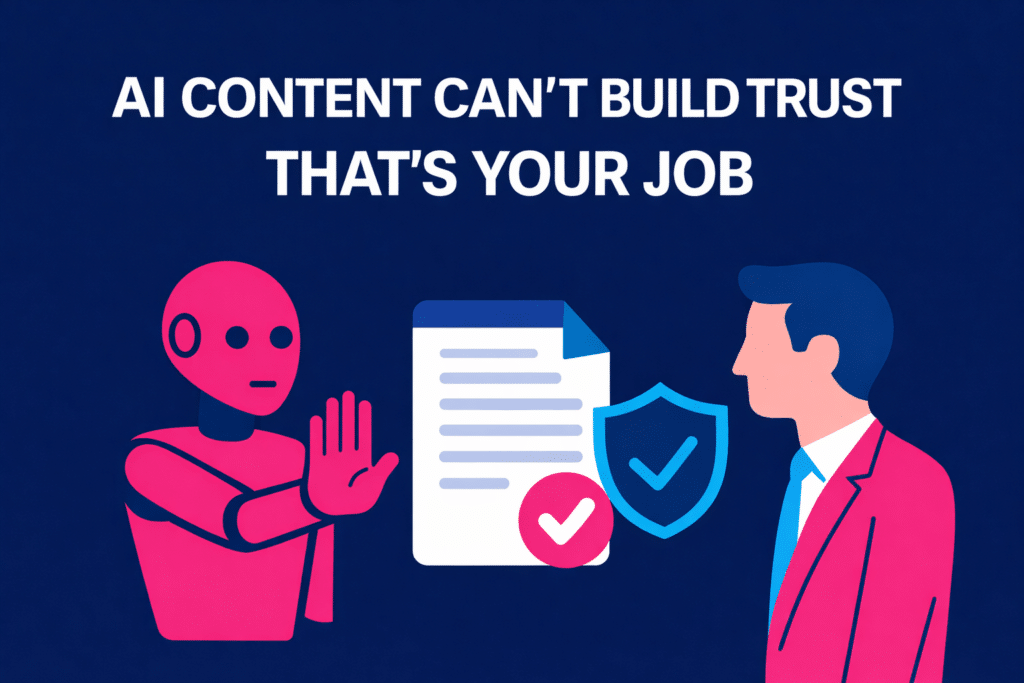
The bottom line? AI can support content creation, but it can’t build trust for you. That’s still your job.
And if you’re not doing it? Someone else will.
My advice: if you’re serious about staying visible — not just now, but next year and beyond — now’s the time to make a shift.
Final thoughts: TRUST is the new SEO
I’ve said it before, but it’s never been truer: visibility is earned, not assumed.
AI might be generating more content than ever. But that doesn’t mean people are engaging with it. Or believing it. Or acting on it.
In a world where anyone can publish, credibility becomes your strongest differentiator. That means your content needs to prove something, not just say something.
It needs to reflect what you know, not what AI thinks you might want to say.
Because trust isn’t just a ranking factor — it’s a human instinct. And as I said earlier, once it’s lost, it’s tough to win back.
At Figment, this is exactly where we help our clients stay ahead. We build future-facing strategies that balance smart AI use with the insight, structure and originality that Google, AI platforms — and your audience — are actually looking for.
✅ We use AI as a tool, not a crutch
✅ We lead with EEAT, so your expertise shines through
✅ We craft content that’s clear, compelling and credible, in every format
Whether you’re publishing weekly blogs, long-form thought leadership or rebuilding your site for LLM optimisation, we help make sure you’re not just adding to the noise — you’re standing out from it.
Because when the AI content bubble bursts, the brands that rise won’t be the loudest.
They’ll be the most trusted.
Ready to lead with expertise, not clutter?
At Figment, we help expertise-led businesses stay visible with a variety of tactics, from human-first SEO to LLM optimisation – and content that earns trust in today’s AI-driven landscape.
Let’s talk about making you the trusted source in your niche.