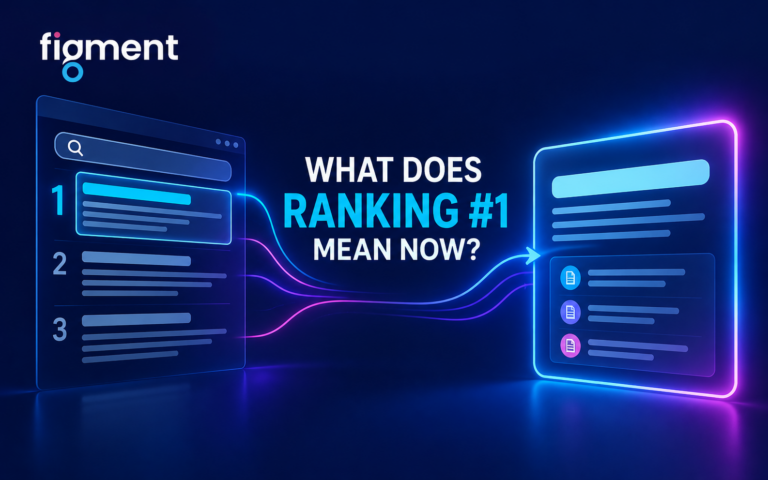
AI has changed SEO, and brand now matters more than keywords
Search behaviour is evolving. AI-driven search, including Google’s AI Overviews and LLM-powered answers, is shifting how content is discovered and ranked. Instead of relying purely on backlinks or keyword density, search engines are rewarding something deeper: trust.
This is where a brand-first SEO strategy becomes essential.
Brands that demonstrate credibility, expertise and authority are more likely to be chosen as the “source” in AI-composed answers. In other words, SEO is no longer just about ranking. It’s about earning the right to be referenced.
For expert-led businesses looking to grow sustainably, this means adopting an SEO strategy that builds reputation at the same time as visibility.
Why brand authority now outranks traditional SEO signals
Let’s imagine a user searches:
“How do I get a mortgage if I’m self-employed?”
AI-powered search won’t simply show the page with the most related keywords. It will collate answers from trusted mortgage advisers, reputable banks, or a well-cited financial education site. The brand matters.
Here’s why brand signals are becoming the new ranking factor:
- AI needs trusted sources, not just indexed documents
- LLMs are designed to avoid misinformation
- Expertise-based content is harder to fake
- Users trust named brands over anonymous blogs
- Search is shifting towards answers, not just links
Now, it’s not about writing more. It’s about being believed more.
This is one of the reasons SEO isn’t dead – it’s just evolving, as we discussed in our article on why SEO still matters.
Understanding E-E-A-T and its role in brand-first SEO
Google’s E-E-A-T guidelines (Experience, Expertise, Authoritativeness, Trustworthiness) have always mattered, but AI-powered search has made them unavoidable.
Here’s how they now guide visibility:
Experience – Has the brand or author lived what they’re writing about?
Expertise – Is the content created by someone with real knowledge?
Authoritativeness – Is the brand recognised in its field?
Trustworthiness – Can users believe what they read?
If two pages offer the same information, but only one comes from a brand with proven E-E-A-T, the AI model will choose the proven brand every time.
The new trust signals AI now looks for
AI doesn’t just scrape content from websites. It reads the signals around it.
These trust signals matter more than ever:
- Brand mentions online (even without a link)
- Consistent publishing from recognised experts
- Being quoted or cited by industry sites
- Profiles of authors and team members
- Positive reviews and sentiment
- Awards and accreditations
- Clear About and Contact pages
- Transparent policies and ownership
Reputation is now a ranking factor.
How brands can build search authority in an AI era
Here’s where traditional SEO meets digital PR, content strategy and brand positioning.
To build a strong brand-first SEO strategy, businesses should:
1. Invest in authorship and expertise
Add expert names to articles. Build author pages. Include credentials.
2. Prioritise high-quality brand mentions
This includes digital PR, interviews, podcast features and citations.
3. Improve on-site trust signals
Clear identity information such as a physical address and phone number encourages both humans and search engines to trust you.
4. Make content genuinely useful
This doesn’t mean make it longer or higher volume. It doesn’t mean stuff more keywords in. Just make sure it answers the questions your audience is asking.
5. Monitor and manage online sentiment
Reviews, social feedback and third-party mentions all help build trust and authority.
6. Align SEO with brand storytelling
Show who you are, why you exist and what you stand for. This is what separates recognised brands from the ones that don’t show up.
Real-world example: Brand authority in action
Take a healthcare provider publishing information about chronic pain treatment. When someone searches the topic, what content will AI surface?
Option A
A thin, keyword-focused article published with no author information on an unknown site.
Option B
A well-referenced guide written by a physiotherapist, published on a site with strong brand history and multiple health citations.
AI will always choose Option B.
Not because of keywords. But because of credibility.
How AI models evaluate brands beyond websites
AI now scans the wider web, including:
- Wikipedia
- Press coverage
- Industry databases
- Reviews
- Social media
- Author profiles
- Podcasts
- Knowledge panels
This is why brand-building is no longer optional. It’s the foundation of modern SEO.
Steps to start building a brand-first SEO strategy
Here’s how businesses can begin shifting from keyword-driven content to brand-driven authority:
- Audit your brand presence across the web
- Check where your company and authors are mentioned
- Create content only experts could write
- Develop an internal spokesperson strategy
- Use digital PR to create industry citations
- Strengthen your About page and author profiles
- Use structured data (such as schema markup) to make brand signals machine-readable
And critically:
Stop publishing content just for search engines, and start publishing content for trust.
Ready to embrace the future of SEO?
SEO used to be a game of ranking signals. Now it’s a game of credibility. And in a search landscape guided by AI, trust is the ultimate currency.
At Figment Agency, we help brands not only get found, but get chosen. We believe SEO starts with brand authority, not just keywords or links.
If you’re ready to work with a London SEO agency that understands AI-driven search, we invite you to get in touch.
We’ll help you create the digital footprint that makes AI trust your expertise, and users remember your name, supported by llm optimisation to strengthen your visibility within AI-generated results.