Why property search optimisation matters for estate agents
The way people search for property has changed. Buyers and renters now rely heavily on search engines before they even consider contacting an agent.
This means your website is no longer just a digital brochure. It’s a primary lead generation tool.
Without proper real estate website SEO, even the best listings can go unseen.
Consider a buyer searching for “two-bedroom flats in Surrey under £400k”. If your listings are not optimised properly, they may never appear, even if you have the perfect property available.
That’s why property search optimisation is not optional. It directly impacts:
- Visibility in search results
- Quality of incoming enquiries
- Overall business growth
A well-structured strategy, often supported by a specialist digital marketing agency, ensures your listings are discoverable and competitive.
How property listings impact SEO performance
Each property listing on your website is an opportunity to rank.
However, many estate agency sites rely on basic templates or duplicated descriptions, which limits visibility.
To improve performance, listings need to be:
- Unique and descriptive
- Structured with relevant keywords
- Optimised for both users and search engines
For example, instead of a generic title like:
“2-bed flat for sale”
A better approach would be:
“Modern 2-bedroom flat in Guildford with parking and balcony”
This simple shift improves property search optimisation by aligning with how users actually search.
Structuring your website for better search visibility
A strong website structure makes it easier for both users and search engines to navigate your content.
Key elements include:
Clear location-based pages
Create dedicated pages for:
- Towns (e.g. Woking, Guildford)
- Property types (flats, houses, new builds)
This helps capture local search intent and improves ranking potential.
Internal linking between listings
Link related properties and location pages naturally. This keeps users engaged and distributes SEO value across the site.
For example, a listing in Surrey could link to a broader guide on the area, similar to strategies used in real estate digital marketing strategies..
Optimised navigation
Ensure users can filter properties easily by:
- Price
- Location
- Property type
A better user experience often leads to better rankings.
Creating content that supports property search
Listings alone are not enough. Supporting content helps capture users earlier in their journey.
This might include:
- Area guides
- Market insights
- First-time buyer advice
For example, someone searching for “best areas to live in Surrey” may not be ready to buy yet, but they are a future lead.
By creating helpful content, you:
- Build trust
- Increase time on site
- Improve overall SEO performance
This approach strengthens real estate website SEO by expanding your reach beyond direct property searches.
Optimising for local search intent
Property searches are highly location-specific. This makes local SEO a critical component.
To improve local visibility:
- Use location keywords naturally
Include town names, nearby landmarks and transport links. - Optimise Google Business Profile
Ensure your agency appears in local search results. - Encourage reviews
Positive reviews build trust and improve rankings.
For example, a healthcare professional relocating for work might search for “family homes near good schools in Reading”. Your content should reflect these real-world search behaviours.
Technical SEO considerations for property websites
Behind the scenes, technical performance plays a major role in rankings.
Key areas to focus on:
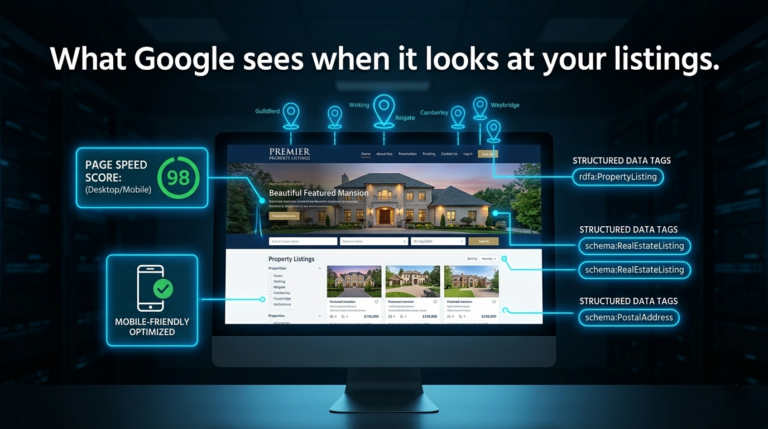
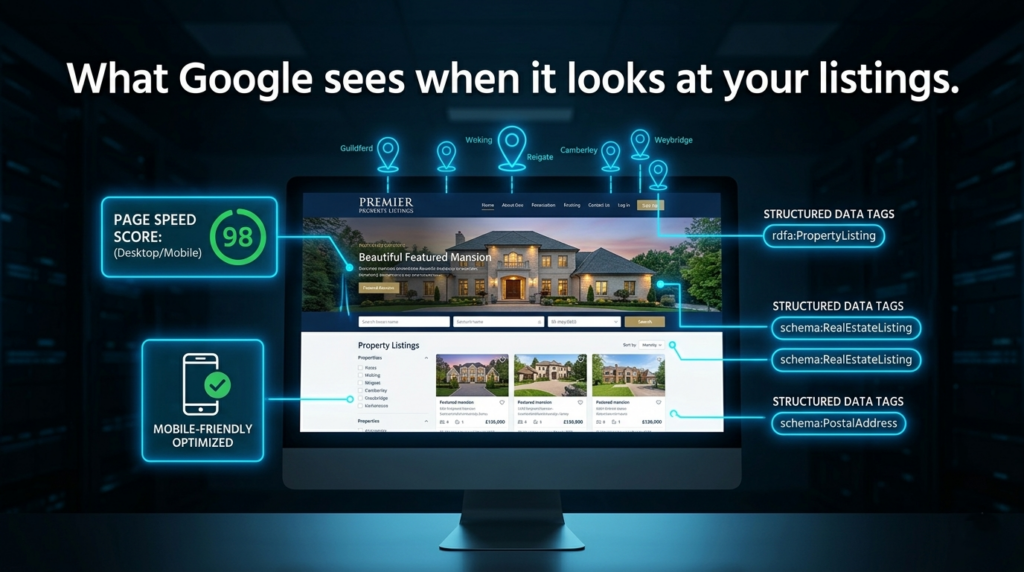
Page speed
Property websites often rely on large images. These must be optimised to avoid slow loading times.
Mobile usability
Most users browse properties on mobile devices. A responsive design that adapts to the user’s device is therefore essential.
Structured data
Using structured data helps search engines understand your listings better, including:
- Price
- Location
- Property type
According to Google’s structured data guidelines, implementing this correctly can enhance how your listings appear in search results.
Turning traffic into enquiries
Driving traffic is only part of the process. The goal is to convert visitors into enquiries.
To improve conversions:
- Use clear calls to action
Encourage users to book viewings or request details. - Provide high-quality visuals
Professional images and virtual tours increase engagement. - Offer helpful information upfront
Include key details such as pricing, location and features.
For example, a busy professional browsing properties during a lunch break is more likely to enquire if all essential information is easy to access.
This is where SEO and user experience work together to deliver results.
Working with the right SEO strategy
Property search optimisation requires a combination of:
- Content strategy
- Technical expertise
- Ongoing refinement
Without a clear plan, it is easy to fall behind competitors.
Partnering with an experienced SEO agency in London can help identify gaps, optimise listings and improve long-term performance.
Bringing it all together for long-term growth
Property search optimisation is about more than rankings. It is about creating a seamless journey from search to enquiry.
By focusing on:
- Well-optimised listings
- Strong website structure
- Valuable supporting content
- Technical performance
You create a platform that attracts the right audience and converts interest into action.
Ready to become the real estate agent of choice for local property searches?
If you’re reviewing how your property website performs or looking to improve visibility, it’s time to explore how your current strategy aligns with modern search behaviour.
Seeking clearer direction on moving towards your growth goals? At Figment, we have proven, award-winning experience in helping property sector businesses grow. Why not talk to us today and let’s explore how we can help you do the same?