Google has recently expanded its new artificial intelligence-driven search feature into a number of new countries. Here we explore the latest news on AI Overviews, and what they are likely to mean for search and SEO.

What are AI Overviews?
AI Overviews (originally called Search Generative Experience) are AI-generated summaries of search results. They appear at the top of Google Search, and are driven by Google’s custom AI model, Gemini.
The aim of AI Overviews is to help users find relevant information, across a variety of web-based sources. They can be short paragraphs, bulleted lists, images or product carousels. They also provide source links, showing where the information came from so that users can further research their topic, and check facts.
AI Overviews use ‘generative AI’. This is a type of artificial intelligence that learns from the data it’s trained on, using it to create something new.
But for users, especially those who are used to tapping into other generative AI engines such as ChatGPT and Perplexity, its snapshot-style summaries have been a long time coming. They make it easier to find information quickly, without having to plough through multiple sources.
It’s all about reducing the effort required by users looking for information, by doing all the groundwork for them. Or at least it’s supposed to be…
Google is quite clear that AI Overviews is an experimental technology, and that it can make mistakes. It has already been forced to revisit the feature after it came up with some ‘questionable’ results, which Google put down to its AI model having trouble understanding queries or language nuances, as well as gaps in quality information.
Having said this, it’s dedicated to making continuous improvements, including preventing it from triggering where there’s nothing useful to share.

AI Overviews: Going Global, with added features
The new Google Search feature began its rollout in May 2024 in the USA. By the middle of August, it had expanded into six additional countries: the UK, India, Japan, Indonesia, Mexico and Brazil.
The aim is to make AI Overviews available to over a billion people by the end of 2024.
This month has also seen the technology incorporate a new save function, allowing users to save their AI Overviews for future reference. It’s also begun testing in-text links within the overviews, plus it’s introduced an option to simplify the language for some of its summaries.
What does the global expansion of AI Overviews mean for Google Search?
The global rollout will undoubtedly put the feature’s effectiveness to the test in different languages and across a variety of cultural contexts. But what does it mean for Google Search, and the businesses that rely on organic traffic?
Google has claimed that AI Overviews will drive more website visits. However, industry observers have remained on the fence about how it will impact content creators long-term.
Google says that because of AI Overviews, users are asking longer questions around more complex subjects. But these claims are yet to be officially verified.
Something else Google has stated is that clicks from AI Overviews are ‘higher quality’ and that users spend more time on the sites they visit from them. But this is another claim that is yet to be verified, and the impact on content creators and website owners is far from clear at this point in time.
The new in-text links could also affect user interactions with Google Search results, and their navigation to external websites.
Some SEO industry commentators have raised concerns that users will no longer need to click through to the source websites once they’ve read the AI-generated summaries. So obviously this is another worry for the business or content creator that relies on organic traffic.
So there we have all the potential downsides. But it’s important to focus on the positive too and explore what AI Overviews could offer in terms of SEO opportunities.
What opportunities can we tap into courtesy of the new AI-driven Google Search feature?
Where a website has its content prominently cited in a Google AI summary, it could well benefit from increased visibility and a higher click-through rate courtesy of users who wish to explore their query in more detail.
It appears that initial testing by the search engine has already confirmed this.
There’s also the chance that AI Overviews may drive better quality traffic to websites. As we said, this is yet to be verified, but it does make sense when you look at it.
If a user clicks through to a website listed as a source in an AI Overview, having spent time reading the summary and better understanding the subject matter, they are likely to be more engaged with the content.
And there are more potential opportunities, particularly for the website that produces in-depth, well-structured content that tackles complex topics.
When AI Overviews surface this type of content as part of a comprehensive answer, it’s the website that provides thorough, authoritative information that’s most likely to be featured. And this could lead to some very valuable things…
Increased authority and credibility: As your content is cited in a context where users traditionally need multiple searches, being featured in an AI summary can signal to users that your website is a trusted source. Over time, this could enhance your site’s reputation.
Less competition for attention: If AI Overviews answer complex queries in one go, it means users are less likely to return to the search engine and look at competitors’ content. Being part of that first, comprehensive answer gives your site a competitive edge.
New content opportunities: Given that AI Overviews aim to answer complex queries, there’s a growing need for content that digs deeper into these more intricate topics. Websites can focus on creating highly detailed, evergreen content that appeals to this need, thereby increasing the chances of being referenced in AI Overviews.

How to optimise for AI Overviews?
As yet, there are no specific recommended optimisation techniques for appearing as the featured snippets in AI Overviews. On this subject, Google has said:
“There is nothing special for creators to do to be considered other than to follow our regular guidance for appearing in search, as covered in Google Search Essentials.”
In other words, if you’re already following SEO best practices, and producing authoritative, comprehensive content, then you should be on the right track to naturally be featured in the Google Search summaries.
Here’s a quick summary of these SEO best practices:
1. Make sure your web pages can be easily crawled and indexed
- Check for and remove any files or tags that are telling Google not to index certain pages. E.g. Robots.txt files or noindex tags.
- Ensure there are no common page errors such as 404 Not Found or 403 Forbidden, as Google won’t be able to access these pages.
- Check that your website’s pages are well-organised to allow Google to efficiently crawl them.
2. Target long-tail keywords
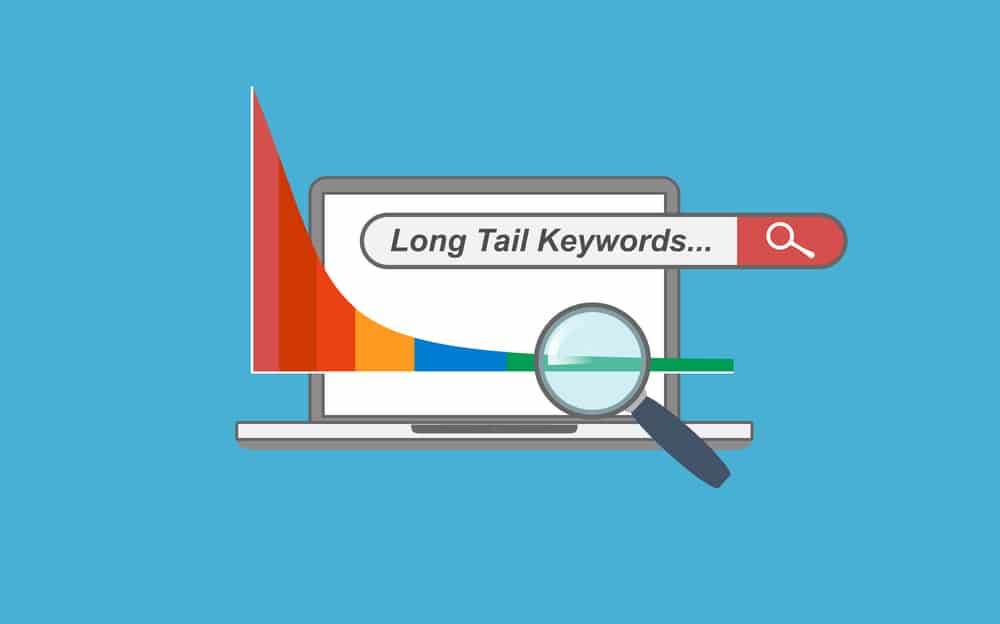
Google says that AI Overviews will be adept at handling complex search queries. These will likely mean long-tail keywords which are the more specific search queries that are longer in length.
By optimising your content around such keywords, you stand a better chance of being featured in the AI summaries.
3. Create quality content
Google’s algorithms prioritise content that meets its stringent quality standards. So by creating quality content, you’ll have an increased chance of being featured in the AI Overviews. And the more comprehensive your content, the less likely a user will be to need to seek more detailed information from a competitor’s site.
Quality content is:
Accurate – factually correct and trustworthy
Original – offering unique insights or personal experience
Authoritative – created or verified by industry experts
Valuable – addressing the user’s needs and answering their questions
4. Provide a positive user experience
Google has always expressed its fondness for a positive user experience. If the way users engage with your content is important enough to influence your Google Search rankings, then we can assume that enhancing user experience could also result in improved visibility in AI Overviews.
A positive user experience is:
Fast – content loads quickly, ideally within just a few seconds
Mobile friendly – no frustrations navigating your site on a mobile device
Secure – HTTPS shows users their data is encrypted and they are safe on your site
5. Adopt an on-page SEO strategy
On-page SEO involves optimising various elements of a website to help Google better understand your content. This process can also prompt it to show for relevant search queries… and potentially AI Overviews too.
You should be optimising:
Title tags – the page titles that show up on browser tabs and in the search results
Meta descriptions – descriptions that compel users to click your link from the SERPs
URL slugs – the final part of the web address that identifies a particular page
Heading tags – headings that help Google understand your content structure
Keywords – the search queries your content is focused on
6. Build backlinks
Backlinks form an integral part of any SEO strategy. Google sees links coming into your site as evidence that other sites find your content valuable and trustworthy.
A site that’s considered trustworthy by Google is a site that could have a better chance of being featured in the AI summaries.
Your backlink strategy should be:
Relevant – aim to get links from reputable sites related to your industry or niche. Links from these sources are more valuable to Google and help establish your site as an authority in your field.
Natural – focus on earning links through high-quality content, guest posting, and networking rather than trying to manipulate the system with paid or spammy links. Google’s algorithms are adept at identifying natural, earned links versus artificial ones, and will penalise the bad ones.
Diverse – A healthy backlink profile includes links from a variety of sources, such as blogs, news sites, and industry directories. This diversity signals to Google that your site is broadly recognized and trusted across the web.
Ready to embrace the future of Google Search?
The SEO industry will clearly be monitoring Google’s approach to balancing AI-assisted search, with driving traffic to websites. These are early days for AI Overviews, and we will be keeping on top of developments, and any specific optimisation techniques that come to light.
Whatever happens, we can see that search is evolving rapidly. It’s something we’ve stayed on top of since we started out in 2006, ensuring we’re ready to take advantage of new opportunities, and share those opportunities with our clients through our SEO services to help boost their growth.
If you’d like to discuss your journey towards online success, you are welcome to talk to Figment.