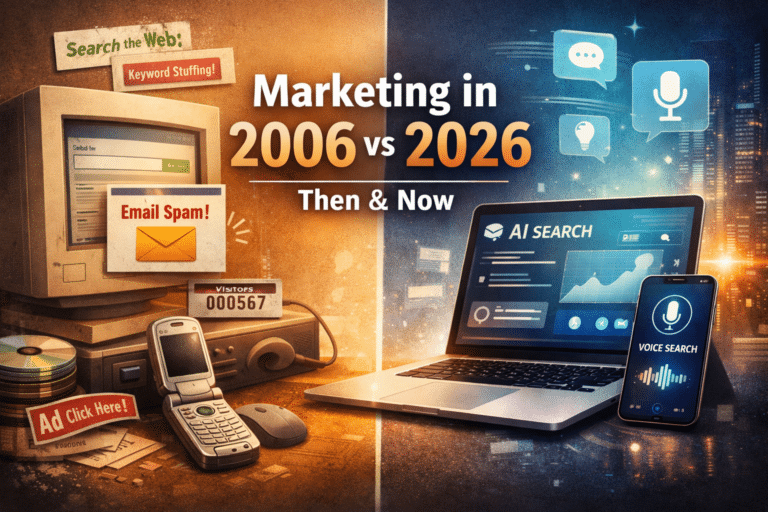
Search is changing. Where once Google’s “10 blue links” were the holy grail of organic visibility, we’re now seeing a shift towards AI-driven, chat-style results.
Google’s AI Overviews pull content from websites they trust, combining information into a digestible, conversational format. This means if you’re not one of the sources quoted, you’re not being seen.
This new format requires a fresh SEO mindset, and that’s where Google AI SEO comes in.
If you’re wondering how to appear in AI Overviews (AIO) or have your content quoted by tools like ChatGPT and Gemini, this guide will walk you through exactly how to optimise for it.
What are Google AI Overviews?
AI Overviews are dynamic summaries that appear at the top of the search results page, often before traditional organic listings.
Instead of directing users to ten different sites, Google’s AI Overviews generate a single, smart response using content from around the web, citing sources it deems the most relevant, helpful and trustworthy.
These AI-generated answers:
- Are powered by large language models (LLMs)
- Use context from the search query and user behaviour
- Pull snippets from a range of online content – often without the user needing to click
In short, they change the game. So if you’re not part of the answer, you’re invisible.
Why Google AI SEO deserves your attention now
With AI Overviews gradually rolling out across search results, brands that fail to adapt will lose visibility, even if they’re ranking well in traditional organic positions.
Optimising for AI visibility means understanding:
- What type of content the AI selects
- How it interprets structure and authority
- What makes content quotable
Think of it as a smarter blend of traditional SEO, clear topic relevance, and helpful, well-structured content that puts the user first.
How does Google decide what to quote?
While the exact algorithm behind AI Overviews isn’t public, based on research and ongoing testing, here’s what we know about what Google’s AI is likely looking for.
1. Structured, easily digestible content
AI doesn’t just crawl pages – it breaks down content to understand what it really means.
Pages with clear structure are easier for the AI to understand and extract:
- Use descriptive headings (formatted as meta data H2s and H3s)
- Format with short paragraphs and concise answers
- Break up complex ideas with bullets or numbered steps
Well-structured content stands a better chance of being cited, because it’s easier for AI to lift and present in a summary format.
2. What Google’s AI looks for: depth, credibility and real-world insight
Google’s AI wants reliable information from credible sources.
This means your content must demonstrate E-E-A-T:
- Experience – Real-world insights, practical tips, or case studies.
- Expertise – Detailed, topic-specific knowledge.
- Authoritativeness – Recognition within your niche or industry.
- Trustworthiness – Transparent, well-sourced content.
To tick all these boxes:
- Add author bios
- Reference reputable sources
- Use data, examples and unique perspectives that showcase real-world experience
3. Semantic relevance and contextual authority
Google isn’t just looking for one good article – it’s favouring websites that show topic mastery.
So instead of publishing one-off posts, aim to build clusters of interlinked content around a subject. This signals to Google’s AI that your site has depth and authority in a specific area.
For instance, if you’re writing about AI SEO, don’t stop at one blog post. Cover topics like:
- The difference between LLMO, GEO, and AI Optimisation
- Tools for AI-driven search visibility
- How smart content design helps AI understand and quote your content
The more you cover your topic from different angles, the more credible and visible your site becomes.
What makes content AI-ready?
You don’t need to completely overhaul your site, but to optimise for Google AI SEO, specific enhancements are essential.
✅ Use clear, conversational language
AI systems are trained on natural language. That means your content should:
- Avoid fluff or filler
- Answer questions directly and helpfully
- Adopt the tone of a human expert offering advice
Even technical topics should be explained as if you’re talking to someone who needs answers quickly, rather than reading a complex white paper.
✅ Include FAQs and direct answers
A powerful way to get quoted in AI Overviews is to anticipate the exact questions users ask.
Use tools like:
- Google’s “People Also Ask”
- AnswerThePublic
- ChatGPT prompts
Format your answers clearly and succinctly. A direct answer in the first sentence followed by a deeper explanation works well.
✅ Strengthen internal linking
Context is the key.
AI considers your site as a whole, not just one page. Link relevant posts together to give your content depth and help the AI understand how your pages connect.
For example, an article about AI Results for Organic Search should point to related service pages and content pillars that reinforce the topic.
✅ Use schema markup where relevant
While we can’t officially mark content as “AI-ready”, structured data such as schema markup helps search engines interpret your content more accurately.
Schema is a type of code you add to your website that helps search engines understand what your content is about – like labelling a recipe, an article, or an FAQ. It doesn’t change how the page looks to visitors, but it gives search engines helpful context behind the scenes.
Depending on the page type, consider using:
- Article schema
- FAQ schema
- Author schema
- Product or service schema
It’s not a direct ranking factor for AI Overviews, but it contributes to overall clarity, making your content easier to trust and reuse.
Who’s getting quoted? (and what you can learn)
Sites that are already being cited in AI Overviews tend to share a few traits:
- Clear, structured content with helpful intent
- A strong topical footprint – they don’t just scratch the surface
- Demonstrated real-world expertise and original insights
Well-known examples like Mayo Clinic, NerdWallet, and Investopedia are often quoted. But we’re also seeing smaller, niche sites succeed, especially when their content is:
- Specific
- High quality
- Regularly updated
Even if you’re a local business or a niche B2B brand, the opportunity is wide open – provided your content ticks the right boxes.
Is AI SEO the end of traditional SEO?
No – but it is an evolution.
Classic elements like page speed, mobile responsiveness, and on-page optimisation still matter. However, AI SEO shifts the focus from rankings alone to being the source of trusted information.
So it’s not about gaming the system. It’s about earning trust – from both humans and machines.
Where to start if you’re new to Google AI SEO
If you’re unsure where to begin, here’s a quick roadmap:
1. Audit your existing content
Which pages already provide helpful answers? Can you improve formatting or depth?
2. Identify high-intent queries
Use keyword tools and AI prompts to discover what your audience is really asking.
3. Make your content easy to scan – for humans and AI
Structure your posts so they can be quoted easily. Think in blocks, not essays.
4. Add context and topical breadth
Build out supporting content and link it all together. The AI values connected thinking.
5. Monitor performance and adapt
Track AI Overviews for your keywords. Tools like Ahrefs, Semrush, or even manual checking can help you spot when your content gets picked up.
Ready to be seen in Google’s AI Answers?
As AI transforms how search works, brands must adapt to stay visible. Whether you’re a startup or a seasoned enterprise, now is the time to align your content strategy with how AI Overviews are evolving.
At Figment, we understand this new SEO landscape, and as a London SEO agency, are ready to prepare your website for it. If you want to be the brand that Google’s AI chooses to quote, not the one left behind, we’re here to help you lead the way.